
How to Read Textbooks Faster Without Losing Comprehension
Use previewing, layered reading, active recall, and pace calibration to work through textbooks efficiently without giving up understanding.

To read textbooks faster, do not simply accelerate from the first page to the last. Decide what the chapter must help you do, then spend your attention where understanding is actually required. Preview the structure, read with questions, slow down for definitions and worked examples, move faster through familiar explanations, and recall each short section with the book closed. This removes aimless time without removing comprehension.
Start with material close to your course difficulty and measure your current reading pace. A useful baseline includes WPM or CPM, completion, and comprehension, not just a speed number.
Define the job before you start
The same textbook supports different tasks: building a first mental model, previewing a lecture, solving an assignment, preparing for an exam, or locating one formula. Each task calls for a different pace.
Write one outcome you can verify:
- explain the central concepts and how they relate;
- identify the conditions under which a formula applies;
- reproduce a worked example independently;
- prepare two questions for class discussion.
“Finish 30 pages” measures movement, not learning. A clear outcome tells you what deserves close reading and what only needs to be located.
Build a chapter map in three minutes
Before reading line by line, scan headings, learning objectives, diagrams, bold terms, worked examples, summaries, and end-of-chapter questions. Previewing is not an attempt to memorize. It gives the details a structure to fit into.
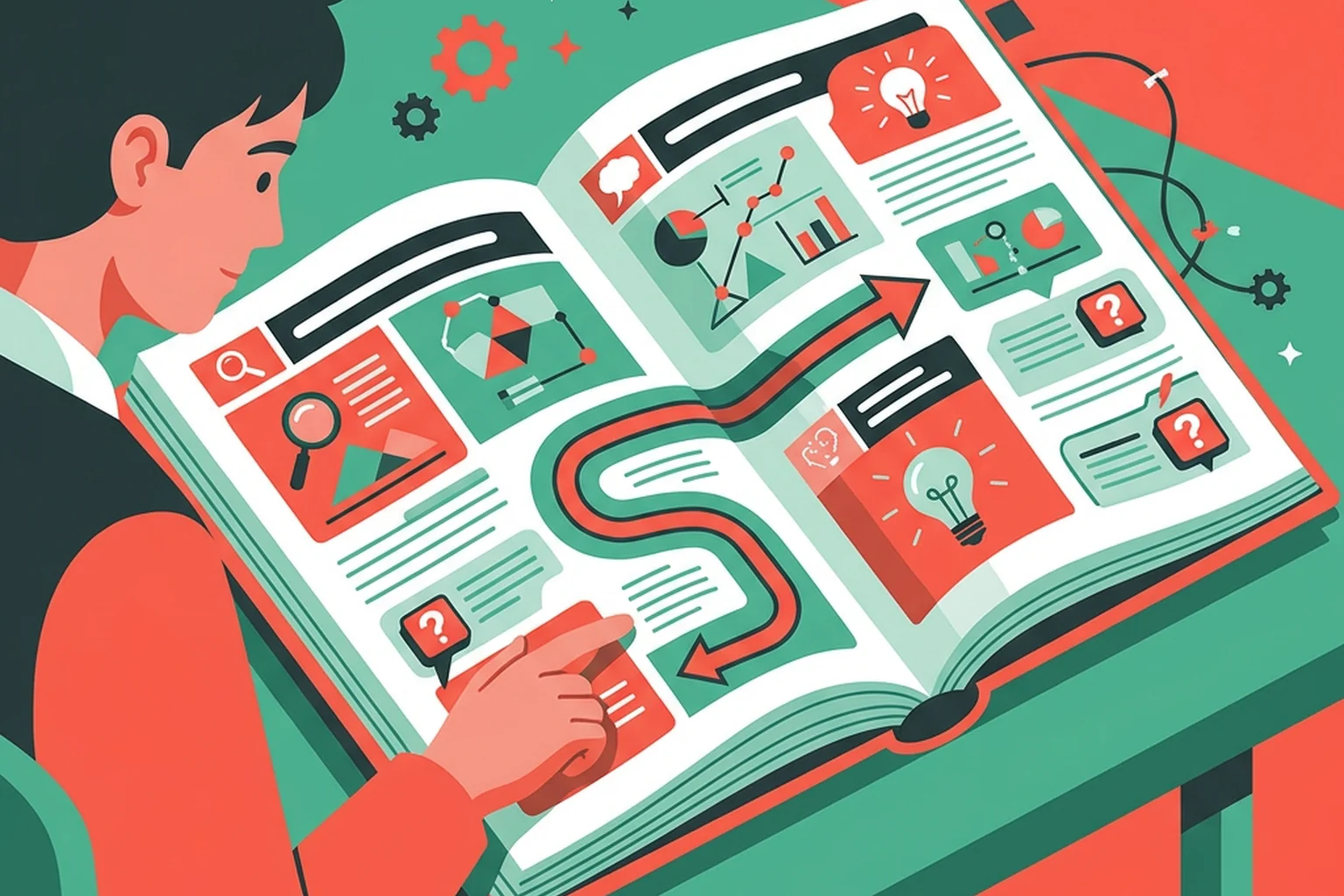
Turn the preview into three questions:
- What is this chapter trying to explain?
- Which ideas are new, and which connect to prior knowledge?
- Which section is most likely to matter for an assignment or exam?
Reading becomes more focused when it is a search for answers. The preview also reveals repetitive or lower-value passages, so every paragraph does not receive the same amount of time.
Shift pace with information density
Textbook reading should not run at one fixed speed. Use three practical gears:
| Material | Reading action | Check for understanding |
|---|---|---|
| Familiar context or repeated explanation | Read faster and confirm the point | Explain why the passage is present |
| New concepts or causal relationships | Read at a normal or slower pace | Restate the relationship in your own words |
| Definitions, derivations, and worked examples | Slow down, pause, and reproduce steps | Complete the key step without looking |
Efficiency comes from noticing quickly when you should slow down. A sentence that changes a definition, the direction of an argument, or the conditions of a solution deserves attention. A familiar example does not need a word-by-word reread simply to keep your pace uniform.
Turn rereading into a targeted check
Rereading is not automatically a mistake. Fixations, rapid eye movements, and occasional regressions are normal parts of language processing. The problem is repeatedly sweeping over the same line without knowing what question you are trying to resolve.

When you catch yourself rereading, identify the gap: a term, a sentence relationship, or missing prerequisite knowledge. Return only to the point that can fill that gap. If the paragraph remains unclear, draw the relationship, create an example, or revisit the preceding section instead of repeating the same pass.
Notifications and constant window switching can also create false reading difficulty. A protected 20- to 30-minute interval is more likely to reduce lost-place rereading than forcing a higher target speed.
Recall after every short section
After two to four pages, or one coherent section, close the book for 30 to 60 seconds and answer:
- What was the most important claim?
- How does it connect to the previous section?
- Can I produce an example or counterexample?
- Which step is still uncertain?
Open the textbook only after attempting the answers. Looking at the page while “recalling” is closer to recognition than retrieval from memory.
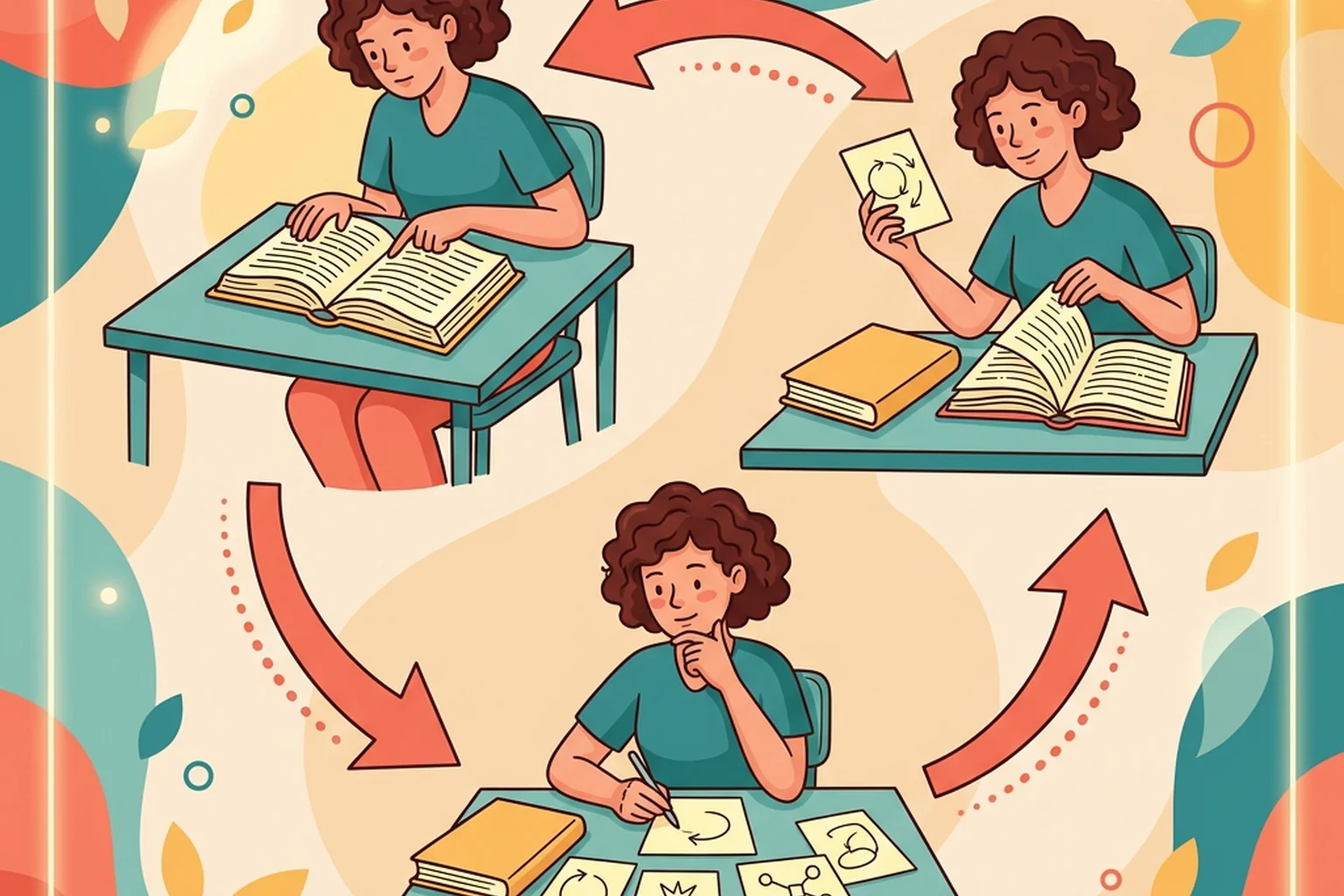
Karpicke and Roediger demonstrated the importance of retrieval for longer-term retention in The critical importance of retrieval for learning. Dunlosky and colleagues also rated practice testing and distributed practice highly in their review, Improving Students' Learning With Effective Learning Techniques. These findings do not mean every textbook can be rushed. They do show why trying to retrieve an idea after reading is a more informative learning check than immediately rereading it.
Replace decorative highlighting with useful traces
Highlighting large blocks can make a page look finished without revealing what you understand. More useful notes are usually brief:
- a one-sentence explanation of a concept;
- an arrow or contrast between two ideas;
- one unresolved question;
- the number of a worked example to revisit.
If every line is important, nothing has priority. Mark the page for future review, not to prove that your eyes passed over it.
Calibrate speed against comprehension
Do not raise the target for every textbook after one fast session. Compare several sessions with similar material, then check whether you can summarize, explain, and apply what you read.
Use a gradual reading-speed practice loop to make small adjustments, and follow the AI reading test method to review pace, completion, and comprehension together. When understanding drops, first change the material difficulty, section length, or reading purpose instead of pressing harder on speed. For the underlying trade-off, see reading speed versus comprehension.
Frequently asked questions
How fast should I read a textbook?
There is no single correct speed. Definitions, derivations, and worked examples deserve a slow, reproductive pace, while familiar context can move much faster. Judge the pace by the task you set before starting, not by comparing page counts with other books or readers.
Is it better to read a chapter twice or once slowly?
Once with retrieval beats twice with recognition for most learning goals. Read the chapter in layers, recalling each short section with the book closed. If part of the chapter still matters and still fails the recall check, return to that specific section rather than sweeping the whole chapter again.
Does highlighting help you study?
Large-scale highlighting shows little benefit in reviews of learning techniques, and marking every line hides what actually matters. Brief selective traces — a one-sentence explanation, a contrast arrow, one unresolved question — give you more value than a uniformly yellow page.
Should I take notes while reading or after reading?
Both have roles. Brief notes during reading capture questions and structure; the bigger gain comes from the recall attempt afterward, when you explain the section without looking. If you must choose, choose the closed-book summary, because retrieval is the part that builds retention.
A practical 30-minute textbook session
- Preview for 3 minutes: inspect the structure and write two questions.
- Read in layers for 15 minutes: move faster through familiar material and slow down for definitions and examples.
- Recall for 5 minutes: close the book and write the main claim, relationships, and gaps.
- Check for 5 minutes: revisit only the missing or incorrect points.
- Plan for 2 minutes: choose the example or recall question to review next time.
Record whether you reached the learning outcome, not only how many pages you covered. As previewing and recall become routine, you will identify high-value sections faster. That judgment is the durable source of textbook reading efficiency.
Start a textbook reading practice session, establish a comparable baseline, and adjust the pace gradually.