
The Pointer Method in Reading: When It Helps and When to Stop
Pointing under the line is the classic speed-reading trick. See what a finger or pen guide really does for pace and focus, and when to retire it.
The pointer method — running a finger, pen, or card under the line as you read — works, but as a training aid rather than a permanent engine. A guide steadies rhythm and keeps the eyes moving forward, which is exactly what two common problems need; for a practiced adult reader, it eventually becomes the slowest thing on the page.
Children point at words before anyone teaches them to, schools spend years weaning them off it, and then speed-reading courses — most famously Evelyn Wood's Reading Dynamics in 1959 — built an industry on telling adults to start again. The contradiction is only apparent. The guide is useful for the same reason in both directions: a moving target disciplines the eyes. Whether you need that discipline, and for how long, is the whole question.
What the pointer method is
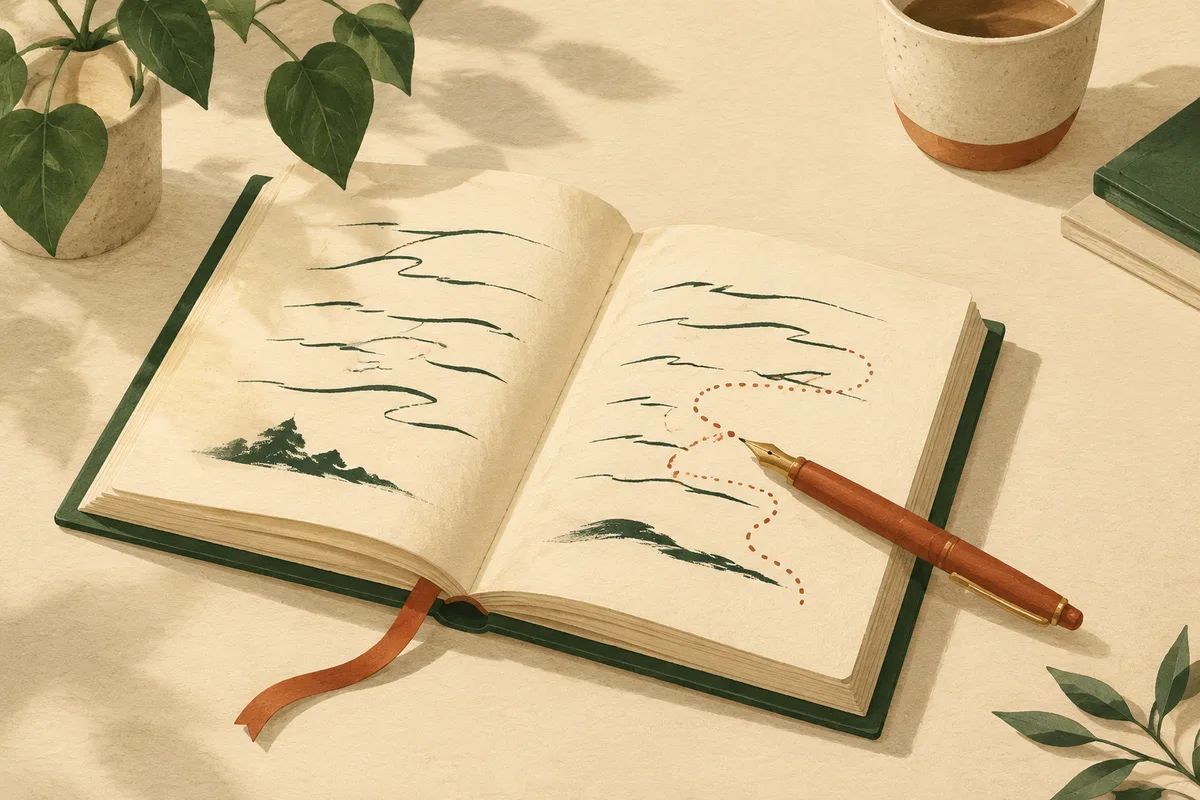
The technique is simple: move a guide — fingertip, pen, or the edge of a card — under or down the line at a deliberate pace, and keep your eyes on it. Variants go by names like hand pacing, meta guiding, or the underlining method. The guide can sweep smoothly, hop in phrase-sized steps, or zigzag down the page; each pattern trains a different rhythm.
To understand why it can work at all, recall how the eyes actually move. They stop and jump — fixations and saccades — and only the stops take in meaning. A comprehensive review of eye-movement research lays out these mechanics (Rayner, 1998). Because the eyes are jump-and-land machines, a moving guide gives them something they otherwise lack: a pace to synchronize with and a direction to hold.
What a guide can actually do
Three benefits are real, and all three are about training rather than magic:
- Forward pressure. A guide that only moves ahead makes backward jumps expensive — the same principle as the card technique for compulsive rereading, just gentler.
- Rhythm. Sweep after sweep sets a cadence, which helps readers whose pace collapses into word-by-word crawling — the voicing habit covered in what is subvocalization. Pairing the sweep with phrase-sized hops is the finger-based version of chunking.
- An attention anchor. For minds that drift off mid-page, following a moving target occupies just enough of the motor system to keep the reader on the line.
One honesty note: for all the technique's fame, direct controlled studies of finger-guided silent reading are sparse. The eye-movement literature explains why a guide can steady rhythm and direction; the rest is practitioner experience — which is a reason to treat the guide as an experiment to measure, not a law to obey.
What it costs
The guide's weakness is the mirror of its strength: it sets a ceiling. Your hand moves slower than a trained reader's eyes jump. Once your unguided pace exceeds your comfortable sweep speed, the finger caps every session at hand speed — a real problem the courses rarely mention.
Two related cautions:
- A fixed-pace sweep flattens difficulty. Easy prose and dense prose get the same cadence, which starves the easy text of its natural speed and rushes the hard one.
- The guide can become a crutch for attention. If you can only read while pointing, the anchor has quietly turned into a dependency — the opposite of training attention itself.
How to train with a guide
Treat the guide as scaffolding with a removal date:
- Sweep smoothly for rhythm. For the first few sessions, glide under each line at a pace that feels slightly brisk. The goal is a steady cadence, not speed records.
- Switch to phrase-sized hops. Move the guide in two-to-four-word steps so the eyes learn to land on groups — the pointing hand is now rehearsing chunking, not just pacing.
- Add light time pressure and measure. Run short sessions slightly above your comfortable rate, then check comprehension. The measuring loop is the same one in how to improve reading speed.
- Retire the guide on schedule. When an unguided session holds the same pace with a steady quiz result, the scaffold has done its job. Keep pointing after that and you are paying hand speed for eye speed you already own.
The digital successor is the paced reader: word mode at a set target, or sentence mode that delivers clause-sized units. It gives the same rhythm and forward pressure with none of the hand-speed ceiling — and you can raise the pace in small steps instead of being limited by your wrist. The guide to practicing with your own articles shows how to wire it into material you actually need to read.
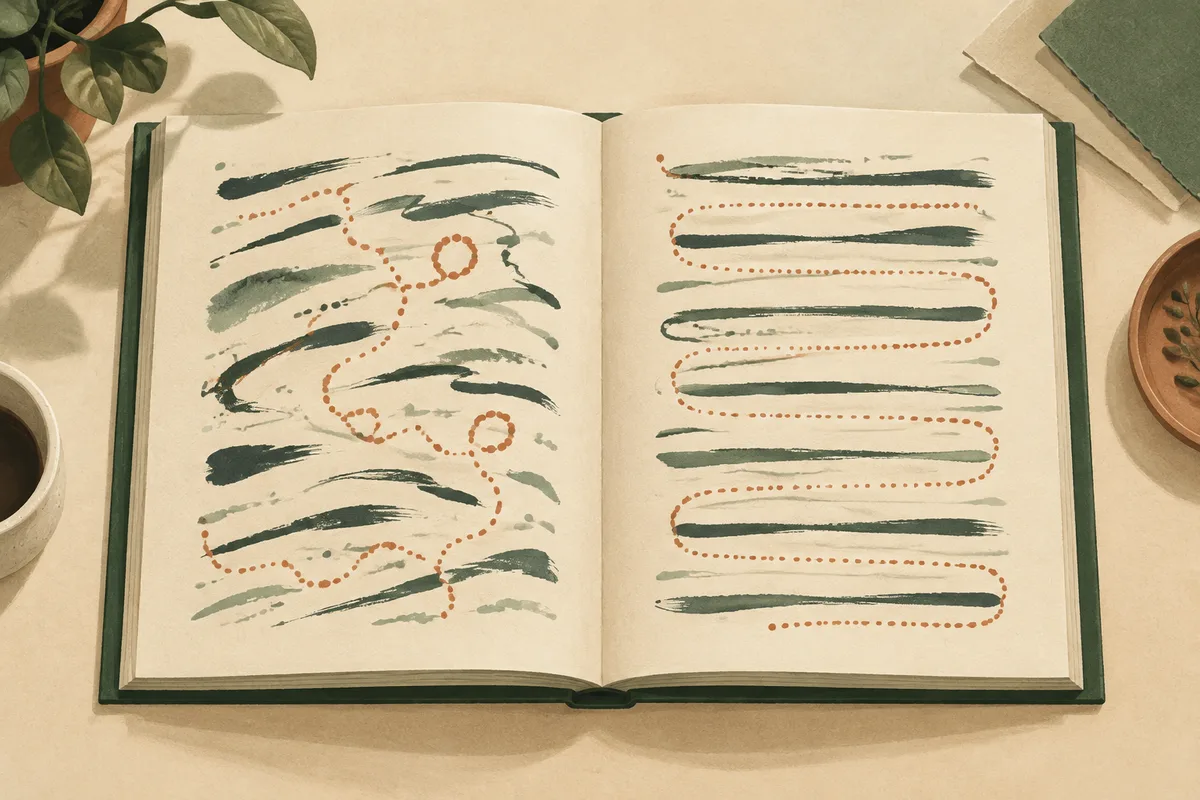
Left: unguided attention, wandering and looping. Right: guided rhythm, steady and forward. Illustration, not eye-tracking data.
When the guide earns its keep
Use it deliberately for a stretch, then retest without it:
- After breaking a rereading loop or a word-by-word crawl.
- When attention drifts so badly that sessions produce nothing.
- When returning to study reading after a long break.
- With difficult new material where the eyes keep retreating.
If none of these apply and your measured pace and comprehension are already where you want them, the honest answer is that the guide has nothing to offer you. Famous does not mean mandatory.
Pointer guides in Chinese and Japanese
The arc — children point, schools discourage, trainers encourage — exists in Chinese classrooms too, where 指读 is a familiar early-literacy habit. The mechanical differences matter more:
Chinese. Text has no interword spaces, so a finger sweeping under characters naturally passes through 意群 boundaries whether or not you plan to. Make it deliberate: hop the guide in sense-group steps rather than character steps, and the pointing hand becomes segmentation practice. Baseline and retest in CPM on the Chinese reading speed test.
Japanese. Horizontal text behaves like Chinese — hop by 文節. Vertical text (縦書き) adds a twist: the guide travels top-to-bottom down each column, right to left across the page, which most readers find steadier than a horizontal sweep because the column itself frames the path. As always in these scripts, progress is counted in characters per minute, not words.
How to tell if it worked
The guide is a training intervention, so measure it like one:
- Baseline: an unguided session on typical material — note pace and quiz result.
- Two weeks of guided sessions with phrase-sized hops and light time pressure.
- Retest unguided on comparable material and compare both numbers.
If the unguided retest holds the gain, the scaffold worked — take it down. If pace only appears while pointing, the guide is carrying the pace rather than building it, and the fix is more phrase-hopping practice, not more pointing. A free reading speed test supplies the baseline and the retest.

The graduation test: the guide rests beside the book, and the rhythm stays. Illustration, not measured data.
Frequently asked questions
Does the pointer method actually increase reading speed?
As a retraining aid, often yes — it enforces forward motion and a steadier rhythm, which lifts pace for readers stuck in rereading loops or word-by-word crawling. As a permanent habit, no: a hand moves slower than trained eyes, so the guide eventually caps your pace.
Why do schools tell children to stop pointing?
Because pointing in early readers tends to anchor attention on single words and slow the shift toward phrase-level reading. The school concern and the adult trainer's advice are about different stages of the same skill.
Is it better to use a finger, a pen, or a card?
They do different jobs: a finger or pen sets rhythm and forward pressure; a card hides already-read text, which targets compulsive rereading more directly. A paced reader mode replicates all of it digitally with adjustable speed.
How long should I keep using a pointer?
Most retraining goals take a few weeks of regular sessions. Retire it when an unguided session holds the same measured pace with a steady comprehension check — the calendar matters less than the retest.
Can pointing hurt comprehension?
Not mechanically — the guide changes where the eyes go, not what you do with meaning. The risk is indirect: a fixed sweep pace rushes difficult passages. Match the guide to the material, and keep the comprehension check in the loop.
Does the pointer method work for Chinese and Japanese?
Yes, with two adjustments: hop in meaning units (意群 or 文節) instead of sliding character by character, and in vertical Japanese text guide the finger down the columns. Measure progress in CPM, not WPM.
Is the pointer method the same as meta guiding?
Meta guiding is the umbrella term from speed-reading courses for guiding the eyes with a hand motion — underlining, zigzag patterns, sweeping. The pointer method is its simplest and most useful form; the showier patterns add little that a steady sweep or a paced reader does not.
A scaffold, not an engine
The pointer method borrows discipline from the hand and lends it to the eyes: forward motion, steady rhythm, phrase-sized landings. Use it while those habits are under construction, let a paced reader take over the rhythm work, and take the guide away on schedule.
Start with a free reading speed test, set your baseline, and find out whether your eyes still need the escort.